> For the complete documentation index, see [llms.txt](https://developer.eagle.cool/plugin-api/llms.txt). Markdown versions of documentation pages are available by appending `.md` to page URLs; this page is available as [Markdown](https://developer.eagle.cool/plugin-api/ja-jp/get-started/creating-your-first-plugin.md).
# あなたの最初のプラグイン
この記事では、Eagle 用のプラグインを作成する方法について説明します。
## Eagle デスクトップアプリケーションの入手
まず、Eagle デスクトップアプリケーションをインストールする必要があります。ここでインストーラーをダウンロードしてください:。Eagle デスクトップアプリケーションをすでにインストールしている場合は、最新バージョンに更新してください。より良いプラグイン開発体験を提供するために、多くの機能が追加されています。
***
## プラグインの作成
1. ツールバーの 「プラグイン」 ボタンをクリックします。
 2. ポップアップメニューで、「開発者オプション」 を選択します。
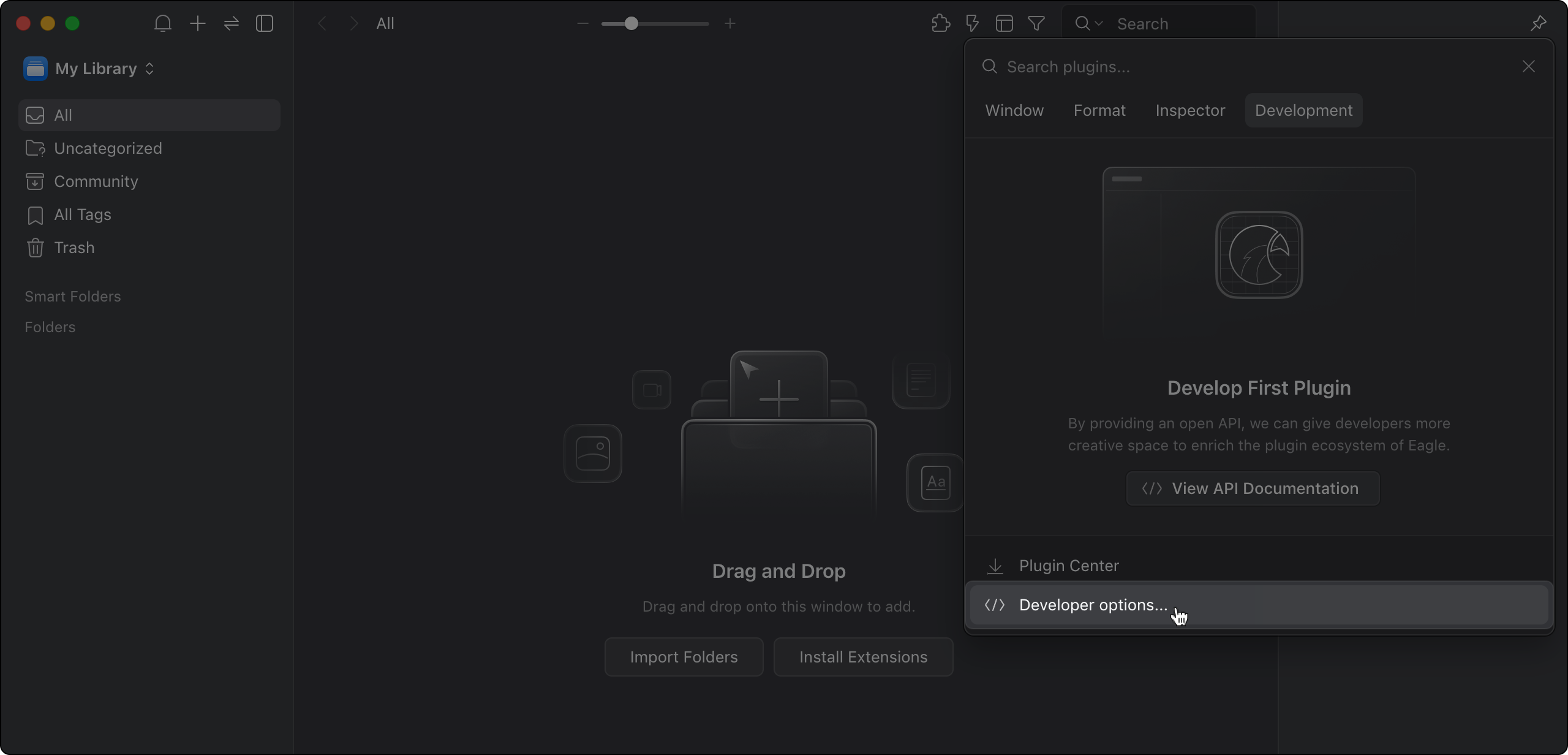 3. 「プラグインを作成」 をクリックします。
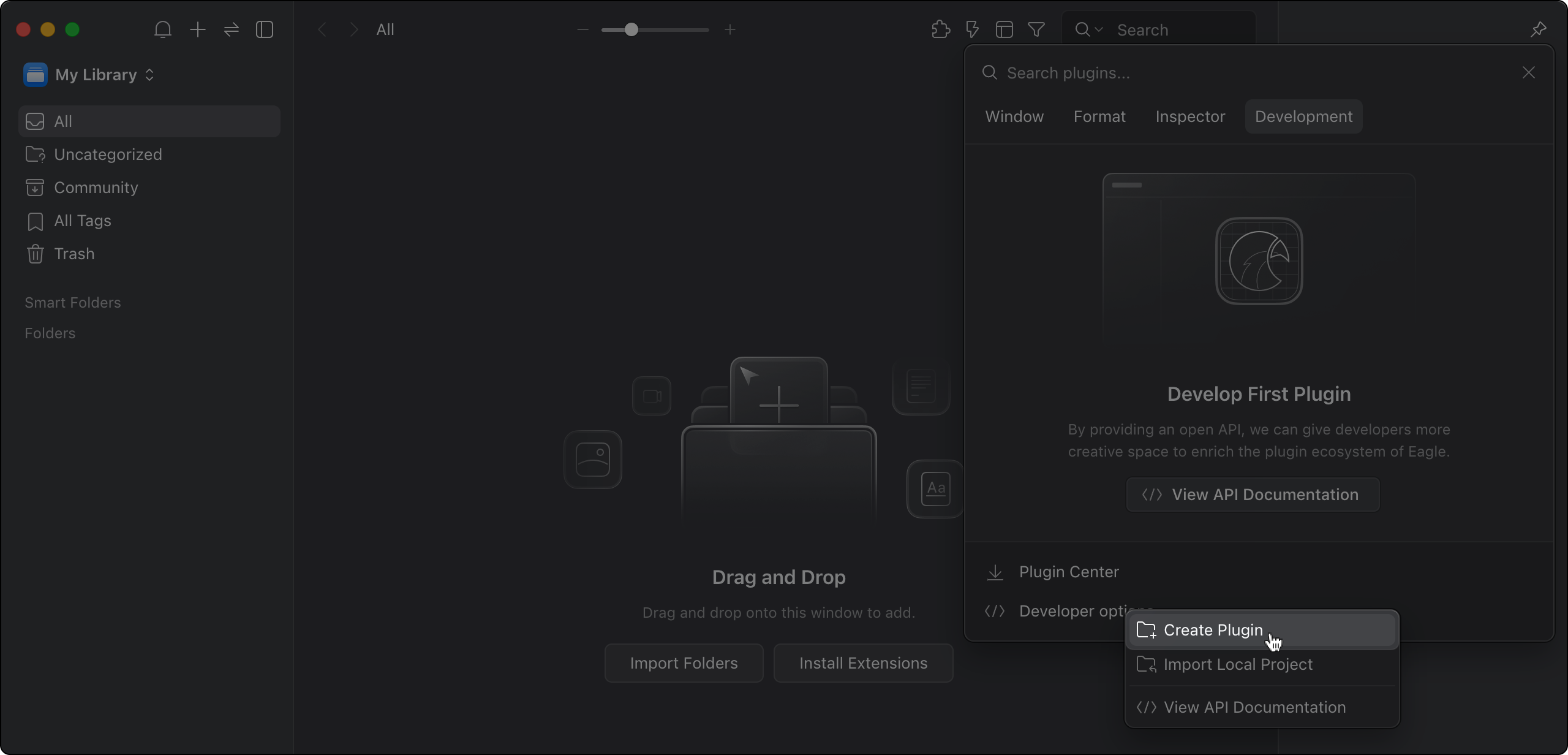 4. 新しいウィンドウで、作成するプラグインのタイプ(ウィンドウ、バックグラウンドサービス、フォーマット拡張)を選択します。ここでは 「ウィンドウ」 タイプを選択します。
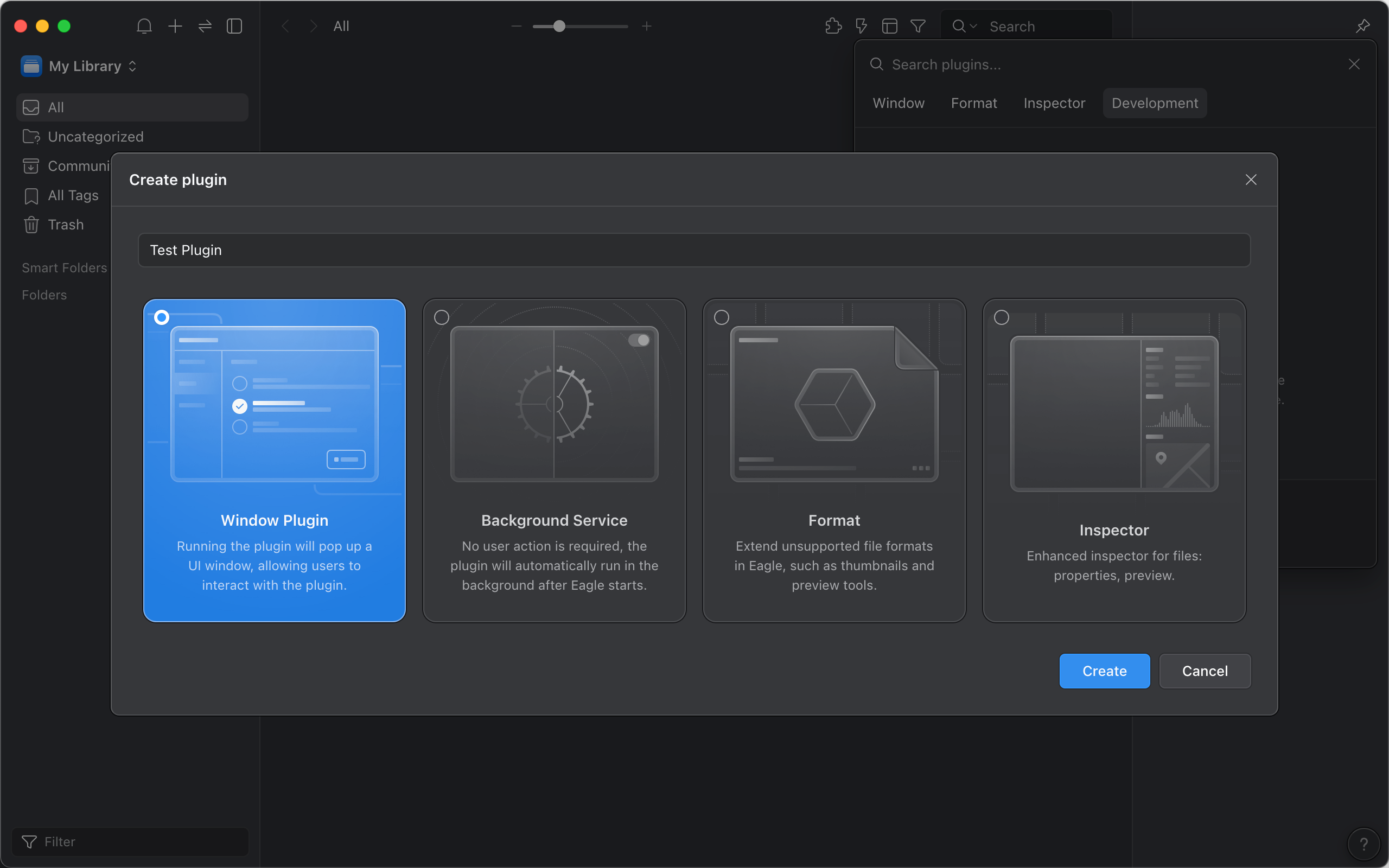 5. プラグインを保存する場所を選択し、作成を完了します。
異なるプラグインタイプの違いについて詳しく知りたい場合は、[この記事](/plugin-api/ja-jp/get-started/plugin-types.md)を参照してください。これらの情報は、どのプラグインタイプがあなたのニーズに適しているかを判断するのに役立ちます。
***
## サンプルプラグインの実行
1. ツールバーの「プラグイン」ボタンをクリックします。
2. ポップアップメニューで、先ほど作成したプラグインを見つけてクリックします。
3. プラグインの基本属性が表示されているウィンドウが表示されます。
***
## コードエディタでプラグインディレクトリを開く
プラグインプロジェクトはすでに作成されています。これで、Visual Studio Code や他のコードエディタでこのフォルダを開くことができます。プラグインは複数のファイルで構成されているため、これらのファイルを同時に編集する必要があります。そのため、フォルダ全体を開くことが重要です。
次のセクションでは、プラグインファイル構造について詳しく説明します。
###
5. プラグインを保存する場所を選択し、作成を完了します。
異なるプラグインタイプの違いについて詳しく知りたい場合は、[この記事](/plugin-api/ja-jp/get-started/plugin-types.md)を参照してください。これらの情報は、どのプラグインタイプがあなたのニーズに適しているかを判断するのに役立ちます。
***
## サンプルプラグインの実行
1. ツールバーの「プラグイン」ボタンをクリックします。
2. ポップアップメニューで、先ほど作成したプラグインを見つけてクリックします。
3. プラグインの基本属性が表示されているウィンドウが表示されます。
***
## コードエディタでプラグインディレクトリを開く
プラグインプロジェクトはすでに作成されています。これで、Visual Studio Code や他のコードエディタでこのフォルダを開くことができます。プラグインは複数のファイルで構成されているため、これらのファイルを同時に編集する必要があります。そのため、フォルダ全体を開くことが重要です。
次のセクションでは、プラグインファイル構造について詳しく説明します。
###